
Part 3 1890-1932
Henry Thompson was a favorite uncle of my husband’s grandmother. She told us many times that Henry went to fight in the American Civil War and for some time the rest of his family did not know where he was or even if he survived. A few months ago, I asked Gopher Records to retrieve a copy of Henry’s military pension file to hopefully fill in his missing years. The pension file contained interviews done with Henry from about 1906 until about 1925 and contained hints and information about his life after the war until his eventual residence in a veterans home in California in 1906. He had finished his service in the 100th New York Regiment at the close of the war in 1865 and had lived in Buffalo, New York for several years before moving west to Chicago. When we last left Henry Thompson, our adventurous and nomadic American Civil War Veteran, he had left Chicago and headed to Upper Michigan.
Mon, Sep 10, 1888 ·Page 4
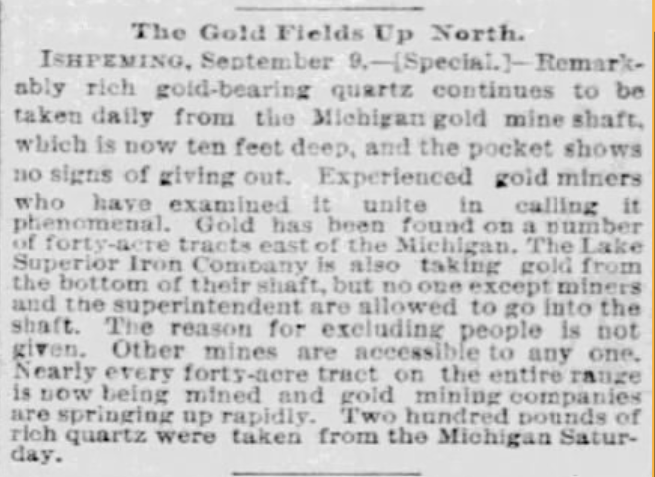
Henry had spent the better part of the 1870s in Chicago and, according to his military pension affidavits, had gained and lost a wife and child during that time. The 1890 US Veteran’s census found Henry in Marquette, Michigan, but we have no information on what brought him there, or what type of work he was doing while he lived there. According to his obituary, Henry was in Alaska for the Klondike Goldrush which began in 1896 and was in full swing by 1898. Although this is not mentioned in his various depositions in his pension file, he does mention in 1925 that he “came west and prospected through Oregon, California, and Old Mexico” after 1888. Upper Michigan did have a robust mining industry – including gold mining around Marquette – in the mid to late 1800s. If Henry spent time working in any of these mines, it stands to reason that he might have felt up to the task of trekking to Alaska in search of striking it rich there.
Henry’s prospecting took him down the west coast to Mexico and eventually he came back up to San Diego. He lived for a time at the White House, a boarding house located at 1307 4th Street, where several other working class men were boarding. According to Henry’s deposition in 1925, he had a paralytic stroke in San Diego in February 1905 and was admitted to the county hospital where he stayed for 7 months. When the stroke happened, Henry fell from a park bench and dislocated his right shoulder and elbow, and broke his right wrist. The dislocations were not reduced and he never regained full mobility of his right arm. Henry said that he had no motion in the shoulder and could only move the arm far enough to get his hand into his right pocket. It was during his stay at he hospital that Henry would first apply for a military pension from the US government. On his application in June 1905, Henry wrote that he never thought he would need a pension, but after his fall, he had become so disabled that he was unable to do any manual labor to earn a living. At that time, the surgeon’s report listed him as “emaciated” at 135 pounds noting his ideal weight should be around 160 pounds.
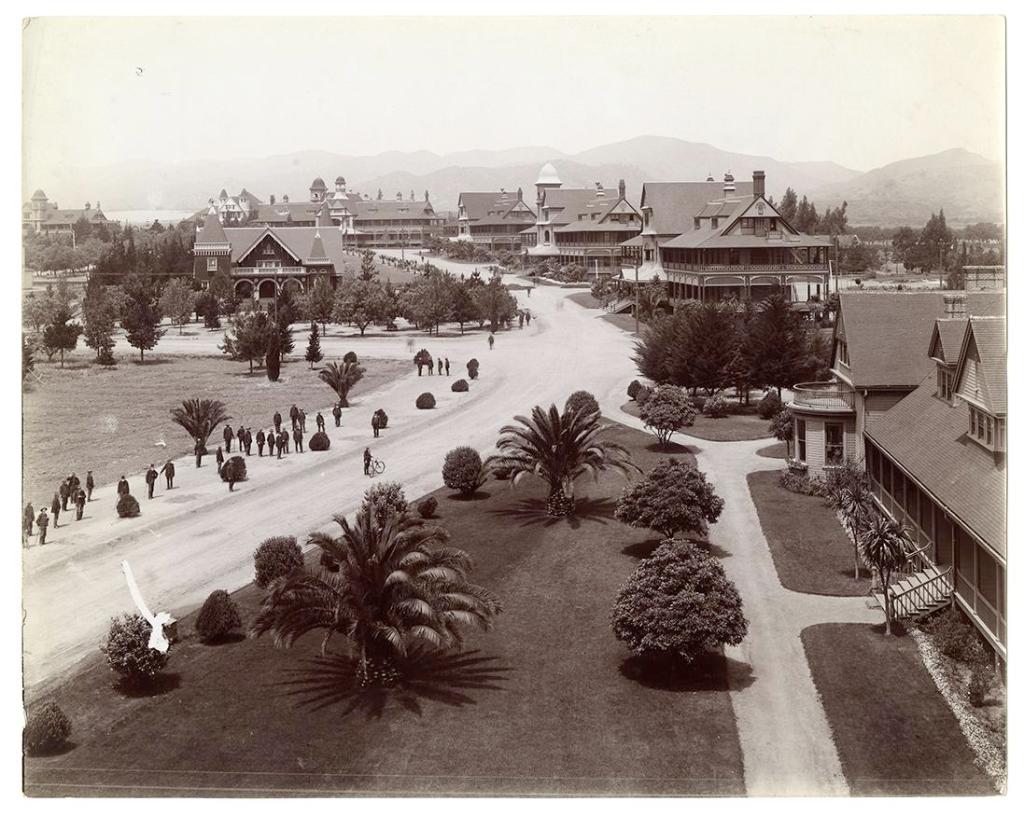
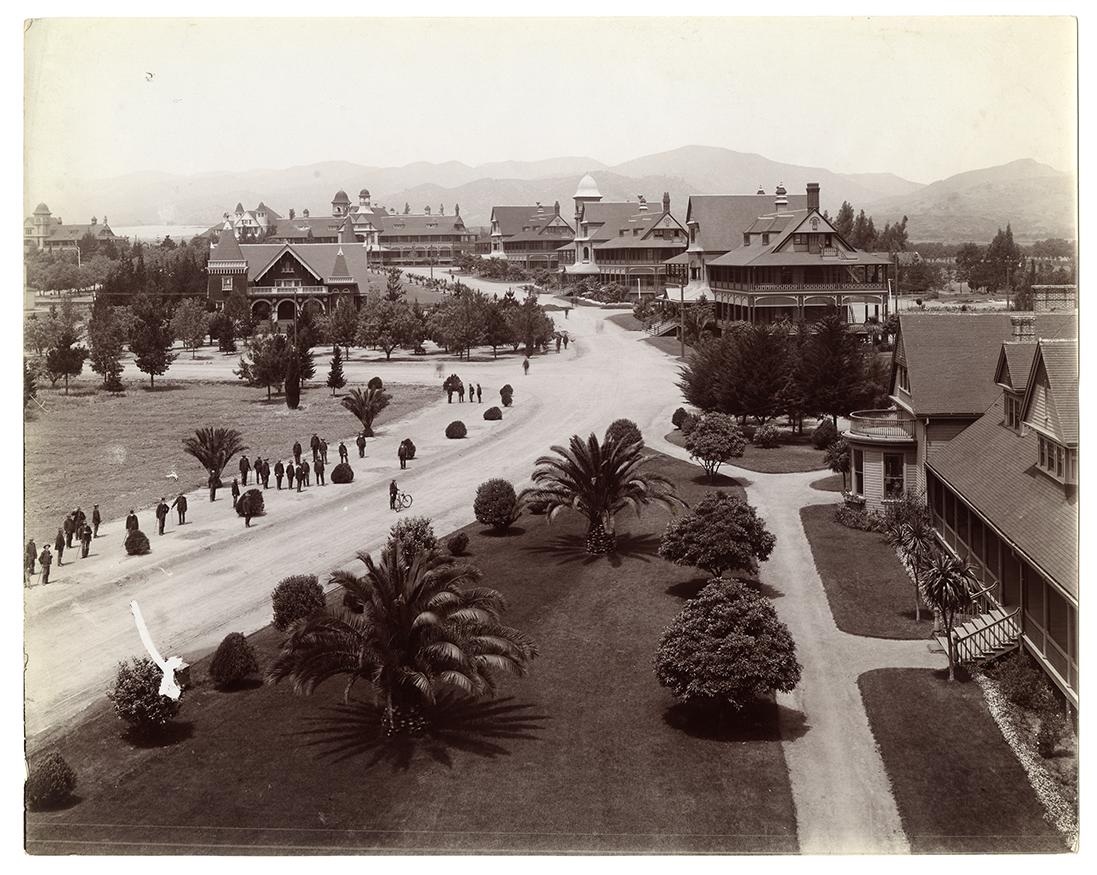
After leaving the county hospital in San Diego, Henry moved to the Sawtelle Veteran’s Home in Los Angeles where he would spend the next twenty five years as a resident. Life at the Veteran’s Home would have been a bit like living in a residential community with a dining hall, a post office, saloon, entertainment hall, hospital, etc, The men would have been assigned to their barracks but they had the freedom to come and go at will. I found a good snapshot of the daily life of the residents here. Henry was living at the Veteran’s Home in May of 1912 when he applied for a pension increase. He was 68 years old and had been living with his disabled right arm for years by that time and receiving $8.00 per month (approximately equivalent to just under $300.00 today). He was also afflicted with hemorrhoids, rheumatism, and heart disease. Henry was approved for an increase to $12.00 per month with notes that he was free of STIs and that senile debility was “not yet in evidence” and his debility was not due to “vicious habits”.
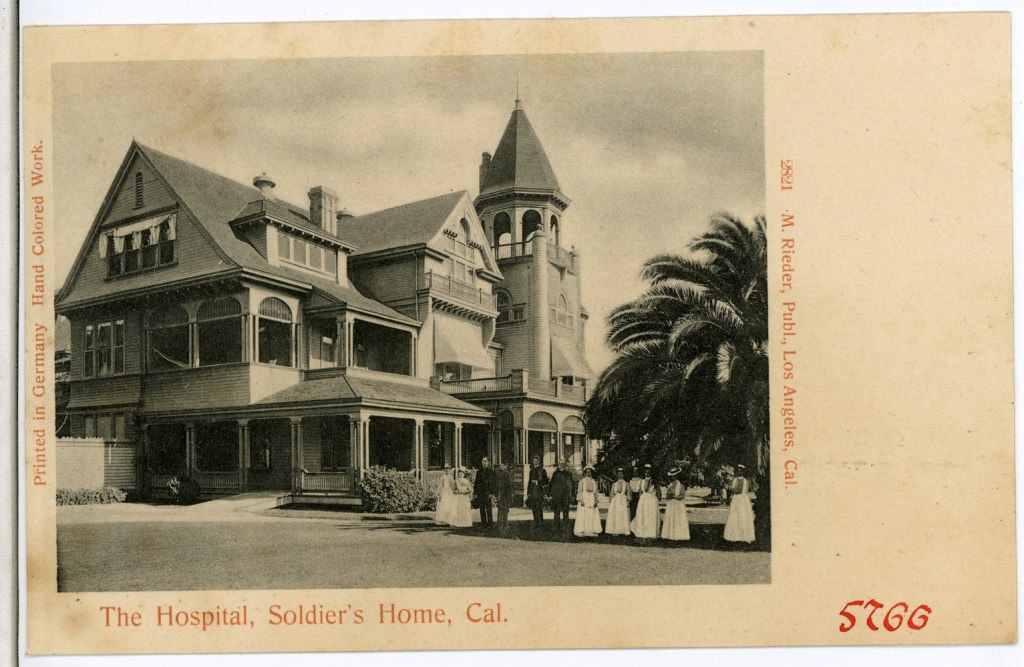
Henry applied for several pension increases as the years went by. He was granted $24.00 by 1914, $30.00 by 1919, $72.00 by 1924, and finally $100.00 by 1931. Henry’s life seemed to move along steadily during his stay at Sawtelle. There were occasional reports in local newspapers that the conditions at the home left something to be desired. In 1913, the US inspector noted that the residents were being poorly fed and that their residences could be greatly improved. At that time it was reported that there were 3216 inmates at the Soldier’s Home in Sawtelle. Again in 1921 concerns were raised at Sawtelle that medical attention was inadequate and that spoiled food was fed to the veterans housed there. In 1925 an inmate of the home charged that unsanitary practices and squandering of federal funds was happening inside the Sawtelle home. Most likely there was at least some truth to these charges and perhaps the conditions there made Henry decide to leave after more than 2 decades as a resident at the Sawtelle Veteran’s Home.
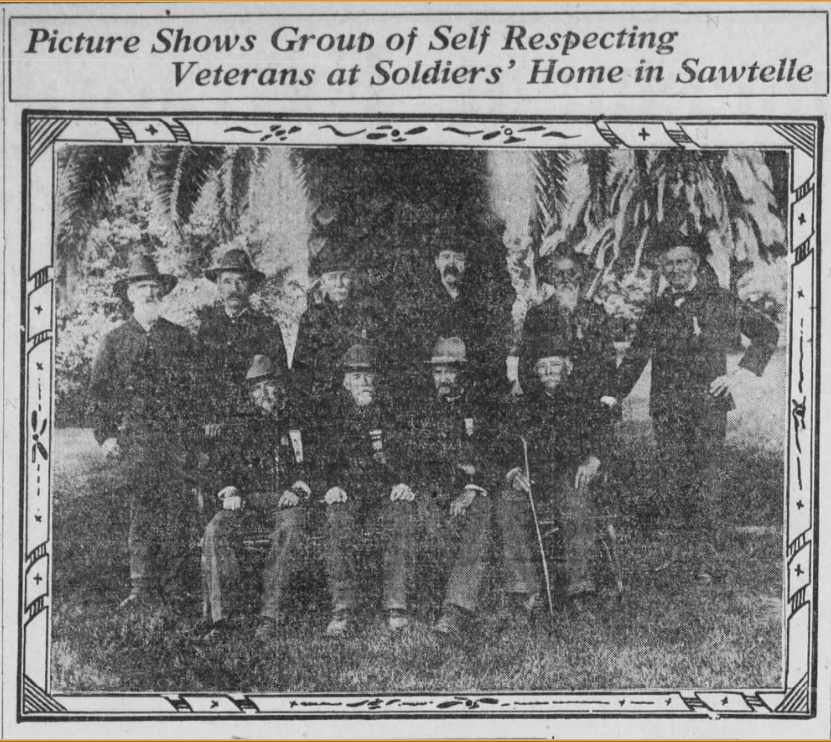
Los Angeles Herald, Tue, Jun 22, 1909 ·Page 8
On 19 September 1932, Henry discharged himself from the Home and moved back to Milwaukee, Wisconsin. When he was admitted to the Sawtelle Veteran’s Home on 6 October 1906, Henry listed his nearest relative as his sister Mary Canfield in Milwaukee. Mary died in December 1932 at her daughter’s home in Waukesha, Wisconsin. Mary’s obituary did not state the cause of her death, but at age 93 it is possible that the family knew that she was failing and perhaps that is the reason for Henry’s move back to Wisconsin. Henry’s only remaining sibling, Elizabeth “Lila” Smith died the following spring leaving Henry without any immediate family. Henry ended up living in the home of his nephew, Ralph Smith and his wife Sadie for the last years of his life.
Sadly, Henry’s final years spent in Milwaukee were not happy ones. In the next chapter of his life, we will look into the information contained in Henry’s pension file and what that information reveals about the years before his death in 1936 at the age of 93.

